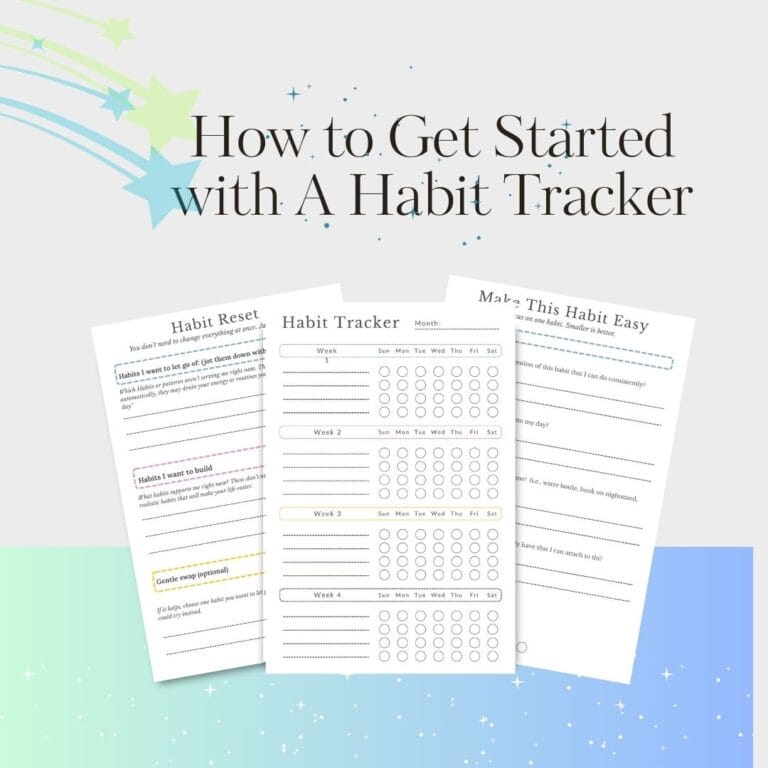
Why You Need a Habit Tracker
Does this sound familiar? You start the week full of good intentions, but somewhere between Monday and Friday, the days blur together. By the end of the week, you are left wondering where the time went and you are feeling frustrated, like you’ve been busy nonstop but don’t have much to show for it. That used to be me too, until I found a simple way to keep myself on track with a habit tracker. It gave me a way to see what I actually did each day and make progress visible.
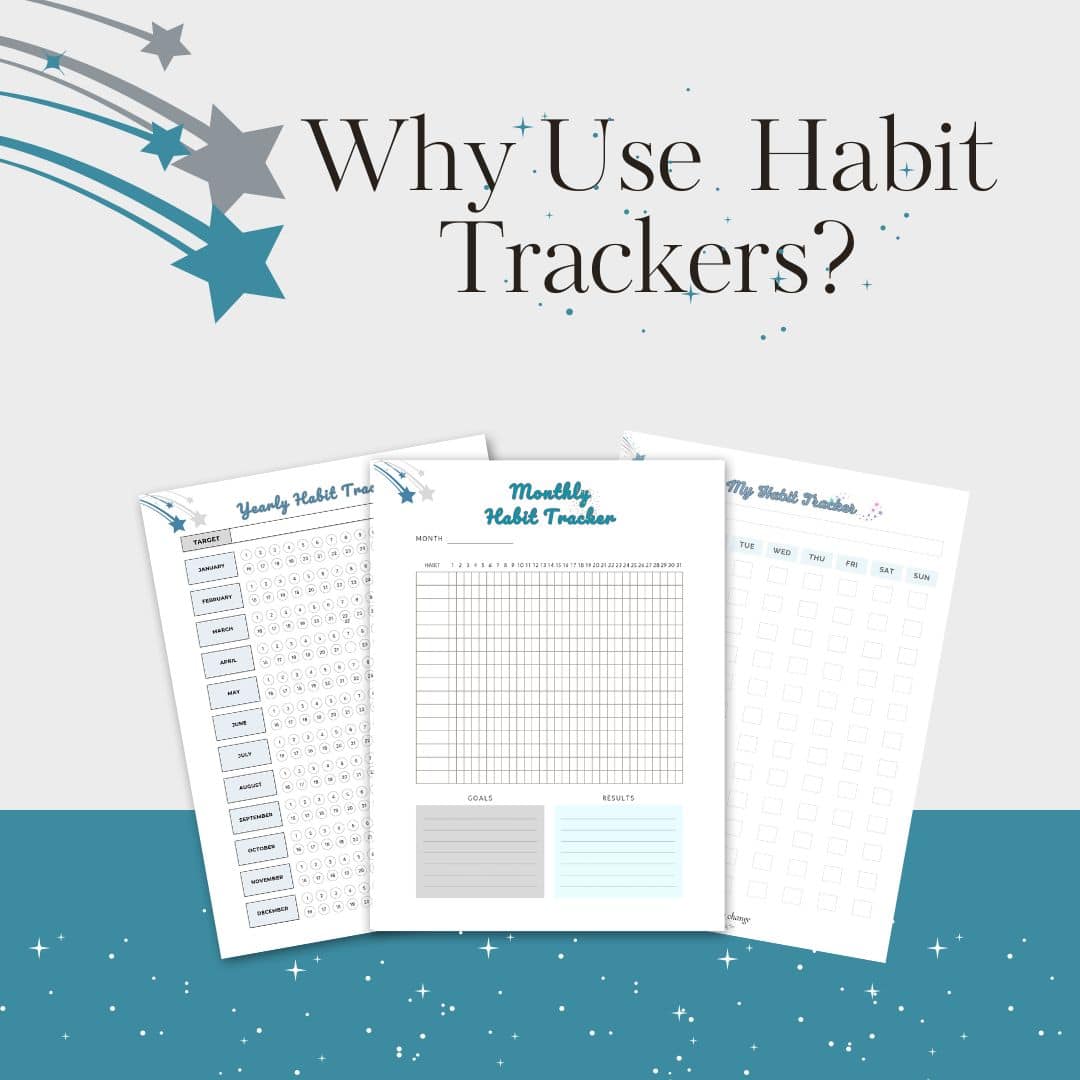
What is a Habit Tracker and Why Does it Help You to Stay Organized?
Think of a habit tracker as a simple tool for logging routine actions. You can track your habits on any schedule that works for you; daily, weekly, monthly or even hourly. Habit can be tracked using an app, a pad of paper, journal or even a spreadsheet.
To get started, pick a few habits you want to add to your routine, like staying hydrated, getting some exercise, or eating more veggies. Then, mark each time you do them to see your consistency grow.
Once you start using a habit tracker, you will notice that it helps you to build consistency. When you see progress, you will want to keep it going. If you miss a day, you can easily spot the pattern and adjust it. The tracker becomes a visual reminder of your habits. It shows what’s working and where the plan needs improvement.
What Types of Habits Can You Track in a Habit Tracker
You can track any habit you want to build into your routine such as exercise, sleep, healthy eating, or anything else that matters to you. Here are a few ideas:
- Excercise
- Drinking a specific amount of water
- Eating healthy or dietary goals
- Meditation
- Reading
- Journaling
- Learning a new skill
- Work on hobby
- Reviewing finances
- Household chores
If you’re just getting started with habit tracking, keep it simple. Pick one or two habits and start there. You’ll be surprised how those small steps build momentum. When life gets hectic, seeing your progress right in front of you helps you stay on track.
Benefits of Using a Habit Tracker
- Accountability: You can see your progress, so when you miss a habit, it stands out.
- Awareness of patterns: You will be able to notice triggers. If you skip your afternoon walk on late meeting days, change your walk to the mornings.
- Motivation: Progress is visible. You can see your habit tracker fill up with checkmarks which will give you more motivation.
- Less chaos: Your daily routine lives in one place.
- Measurable: You can compare weeks. Last week you only worked out 3 days and this week it was 5 days.
Different Types of Habit Trackers to Fit Your Lifestyle
Habit tracker ideas range from paper trackers to apps. The best choice of tracker depends on how you like to stay organized. Some people want quick daily checks while others want a broader weekly or monthly view. Choose what fits your style, your schedule and your goals. Here are some examples of habit trackers:
- Paper planners: Great for people who enjoy writing by hand. You can draw grids and color in boxes. It feels satisfying and tactile.
- Apps: Helpful for reminders and stats. Popular apps include Habitica, which turns habits into a game, and Streaks, which focuses on building daily streaks.
- Spreadsheets: Good for simple grids and charts. You can add formulas, but you can also keep it basic.
Daily Habit Tracker
A daily habit tracker tracks your habits every day. You mark each habit once per day, often in a grid.
Pros of a daily habit tracker:
- Clear progress – you can see the clear progress you make which helps to build momentum.
- Fast feedback – seeing your progress daily helps you stay on track and make adjustments as needed.
- Simple setup – it’s easy to start and maintain.
Cons of a daily habit tracker:
- Rigid – Tracking every single day can start to feel like pressure, especially if your schedule changes or life gets unpredictable.
- Cluttered – Not all habits are daily, and mixing weekly or occasional ones in the same tracker can make it harder to stay motivated.
Weekly Habit Tracker
A weekly habit tracker sums up actions across a week. You might plan targets, like three workouts, and check them off as you go.
Pros of a weekly habit tracker:
- Flexible– Perfect for busy schedules.
- Balanced view – You can take a look at the entire week, which can reduce daily pressure.
- Less cluttered – Good for habits that happen a few times per week.
Cons of a weekly habit tracker:
- Less instant feedback.
- Easier to procrastinate until the weekend.
Best for exercise goals, meal prep, deep cleaning, or study blocks.
Monthly Habit Tracker
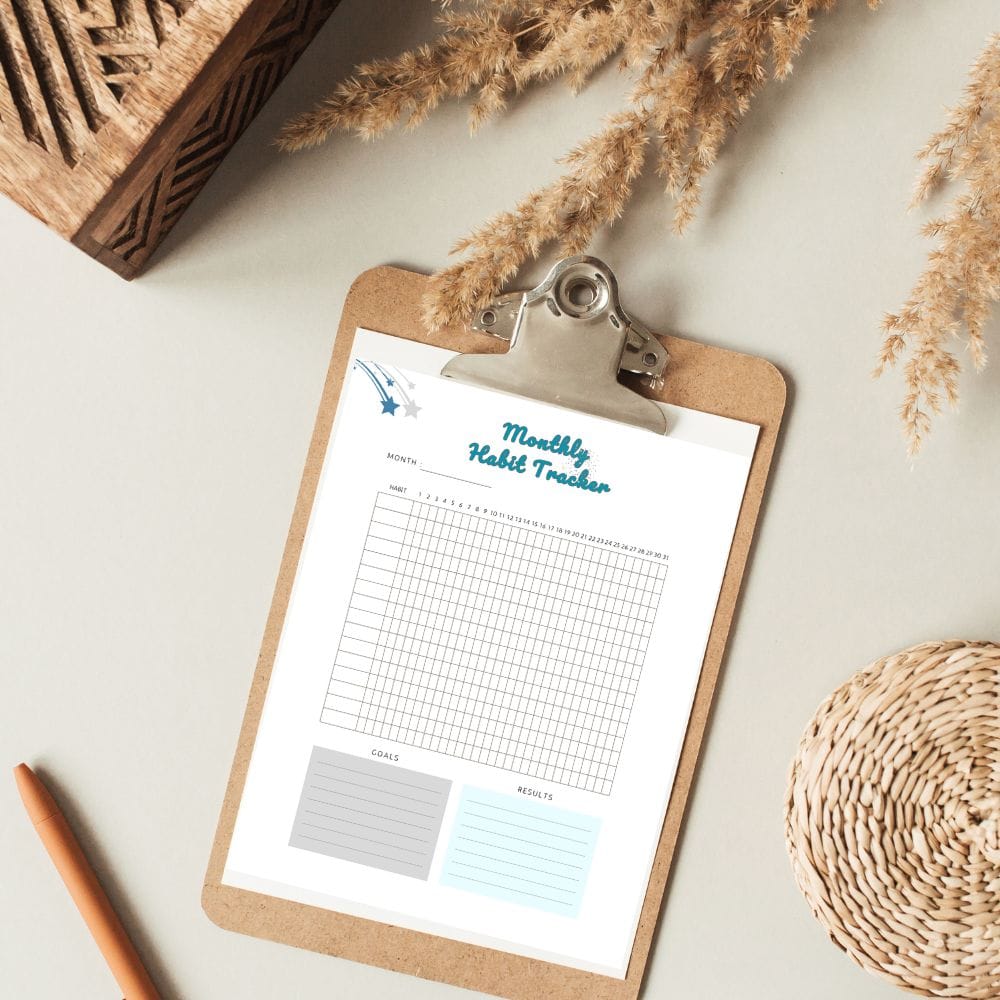
A monthly habit tracker shows a long view of your habits across 30 days. You see trends at a glance.
Pros of a monthly habit tracker:
- Insightful – Great for spotting patterns over time.
- Motivating – Lets you see the big picture for long-term goals like savings or sleep quality.
Cons of a monthly habit tracker:
- Misleading – Can hide day-to-day dips.
- Frustrating – Progress may feel slow without weekly checkpoints.
Compared to a daily tracker, monthly grids are better for big-picture trends, not quick fixes. Many people use both: daily for action, monthly for review.
Yearly Habit Tracker
A yearly habit tracker gives you a bird’s-eye view of your entire year; it’s less about the details and more about seeing how consistent you’ve been over the long haul. It’s great for spotting cycles, seasons, and overall progress.
Pros of a yearly habit tracker:
Revealing – Shows long-term consistency and patterns that short-term trackers miss.
Encouraging – You can literally see your growth from January to December, which builds momentum for the next year.
Cons of a yearly habit tracker:
Too broad – It doesn’t show the daily or weekly fluctuations that affect progress.
Overwhelming – Looking at an entire year at once can feel daunting, especially if you miss chunks of time.
Compared to monthly or daily trackers, a yearly tracker is best for reflection and big-picture habits — things like fitness consistency, spending, or creative output. Many people use it as a review tool at year’s end to see what worked, what didn’t, and where to focus next.
Common Mistakes to Avoid When Starting a Habit Tracker
- Tracking too many habits: Start with 1 to 3. Crowded trackers lead to burnout.
- Choosing vague habits: Be clear. Use “walk 15 minutes” instead of “be active.”
- Ignoring flexibility: Life happens. Build in buffer days or weekly targets.
- Quitting after a miss: Misses are data, not failure. Restart the next day.
- No review routine: Without a check-in, the tracker fades. Schedule a weekly review.
- Using the wrong format: If you hate apps, use paper. If you forget notebooks, use your phone.
How to Use a Habit Tracker: Simple Steps to Get Started
Learning how to use a habit tracker is straightforward. Keep it simple so it sticks.
- Pick 1 to 3 habits. Choose small, clear actions. Example: Drink 6 glasses of water, read 10 minutes, stretch 5 minutes.
- Choose a tracker type. Paper, app, or spreadsheet. Go with what you will actuallty use.
- Set cues and reminders. Tie habits to anchors, like after coffee or before brushing teeth. Use app alerts if needed.
- Create your logging routine. Mark your tracker at the same time each day, like after dinner or before bed.
- Review weekly. Look for patterns. Keep what works, adjust what does not. Add one new habit only when ready.
- Reward progress. Celebrate small wins, like a star sticker or a Friday treat.
- Keep it visible. Place a paper tracker on the fridge, or put the app on your home screen.
The goal is consistency, not perfection. A simple system beats a perfect plan you never use.
Tips for Making Your Habit Tracker Work Long-Term
- Start small: Tiny wins stack up. Increase goals slowly.
- Adjust with seasons: Change habits when your schedule shifts.
- Pair with your planner: Add habit check-ins to your calendar for daily cues.
- Use habit tracker ideas: Color code by category, add mini rewards, or share a tracker with a friend.
- Automate reminders: Set alerts in Habitica or Streaks to nudge you at the right time.
- Do a monthly review: Keep what works, drop what does not, and refresh your list.
- Remove it: Once a habit feels natural and you don’t need a reminder anymore, go ahead and take it off your tracker. That’s a sign it’s officially part of your routine.
Download a Habit Tracker!
Want to start tracking your habits? Enter your email below to get a habit tracker that fits your style and helps you stay consistent with the goals that matter most.
Pick one habit today and track it for a week. Keep it simple, review often, and enjoy the momentum. Your future self will thank you.