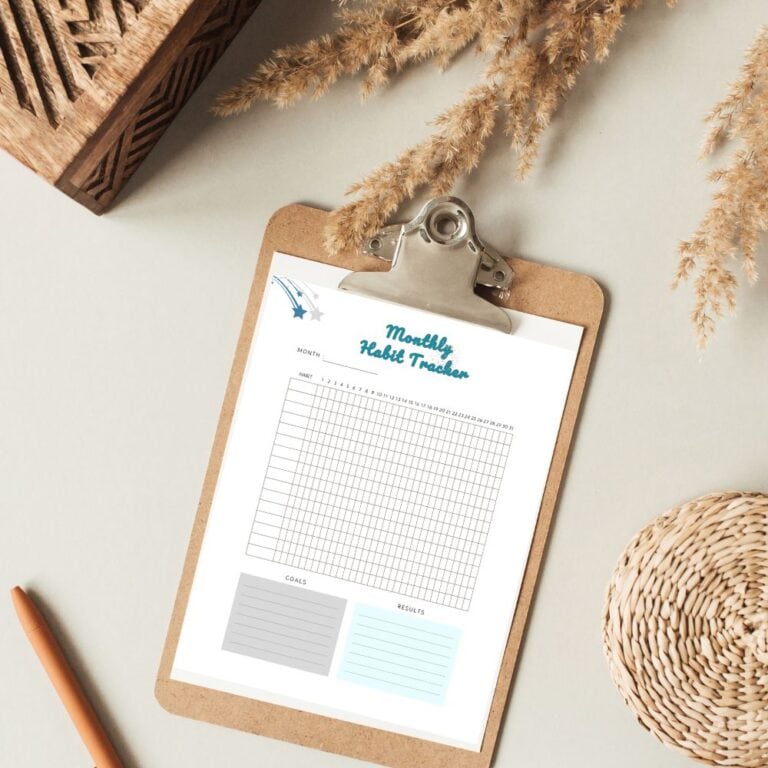
How to Get Started With a Habit Tracker PDF
Suddenly, you want to eat better, get organized, fix your routines, feel healthier, and finally stay on top of things. All at once. You have a habit tracker and you are ready to get started. You are motivated at first… and then it feels overwhelming. When that happens, it’s hard to start anything at all. If that is where you are right now, it’s not because you lack discipline or motivation, it’s because you are trying to change too much at once. It’s actually smarter to start small and a starter habit tracker pdf and these tips are here to help.

Step One: Assess Your Habits Before Adding New Ones
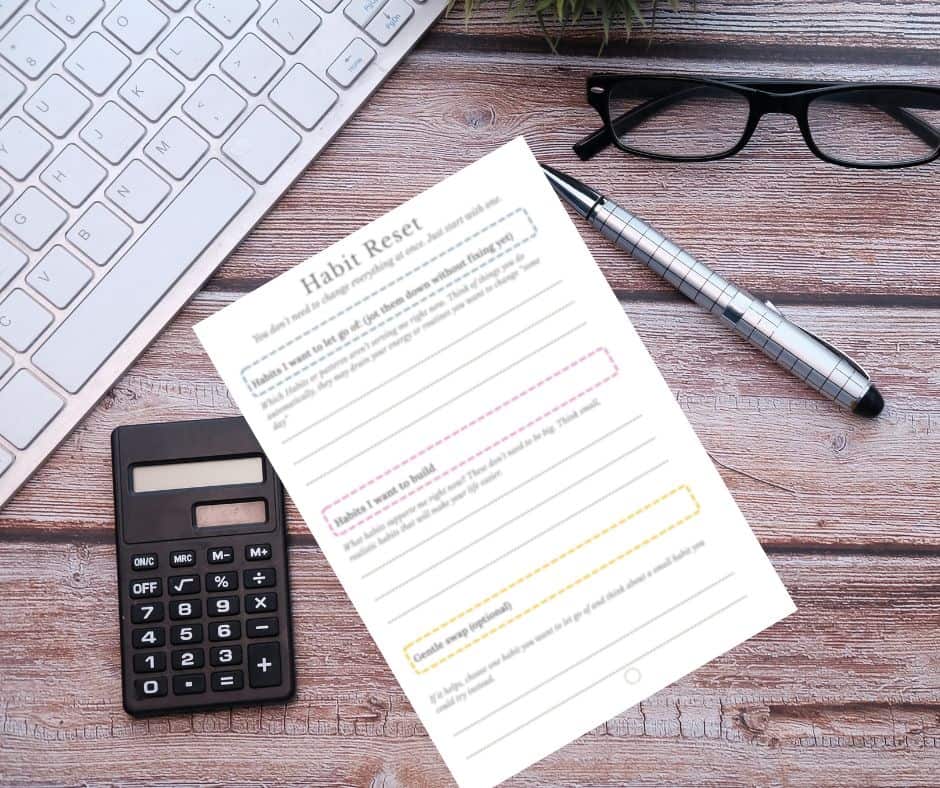
Before you add a single new habit to your life, it helps to stop and take stock of what’s already there.
Not every habit needs to be fixed, but some patterns quietly drain your energy without you realizing it. These are often the habits that happen on autopilot, the ones you keep meaning to change “eventually.”
Take a minute to ask yourself:
- Which habits feel automatic but unhelpful?
- What routines leave me feeling rushed or scattered?
- What do I keep saying I want to change later?
This isn’t about guilt or self-criticism. It’s simply awareness. You can’t build better habits if you don’t know what’s currently taking up space.
Step Two: Decide What You Want to Build (Not Everything)
Once you’ve identified what you’d like to let go of, the next step is deciding what you actually want to add.
This is where most people go wrong. Instead of choosing one or two habits, they try to overhaul everything at once. That’s a fast way to burn out.
Instead, ask yourself:
- What would make my days feel a little easier?
- What habit would support my energy right now?
- What would I realistically show up for, even during a busy week?
Choose one or two habits. That’s it. You’re not locking yourself into these forever; you’re simply giving yourself a place to start.
Tip! Once you take note of the habits you want to break, think about the new habits you want to develop. Can you use one of them to replace the old habit? For example, stop drinking soda for breakfast (old habit), and drink a glass of water in the morning (new habit).
Step Three: Start With Starter Habits (Small on Purpose)
Starter habits are intentionally small. They’re designed to be easy to begin and hard to skip. They don’t look impressive on paper, and that’s exactly why they work.
A few examples:
- Drink one glass of water in the morning (instead of 8 glasses)
- Read one page before bed (instead of 3 chapters)
- Spend five minutes planning dinners for the week (instead of spending Sunday morning planning)
- Step outside once a day (instead of take a 2 mile walk outside)
Small habits build consistency. Consistency builds momentum. Once you conquer these habits, make them bigger, stretch one page to 10 pages, drink3 glasses of water and so on.
Make Your Habits Easier to Start
If a habit relies on willpower or remembering, it’s already working against you. Instead, make it easier to begin.
Use Visual Clues
Visual reminders reduce mental effort.
A few simple examples:
- Keep a water bottle near your phone
- Leave a book on your nightstand
- Keep your planner open on the counter
If you can see it, you’re more likely to do it.
Attach the Habit to Something You Already Do
You don’t need a brand-new routine. You just need to build onto one you already have.
For example:
- After brushing your teeth → stretch for 30 seconds
- After your morning coffee → write one line in a journal
- After dinner → jot down tomorrow’s meal idea
This makes habits feel natural instead of forced.

Break Big Goals Into Small Habits
Goals are big and vague. Habits are small and actionable.
Instead of saying:
- “I want to eat better”
Try: - “I’ll add one vegetable to dinner.”
Another place this shows up for a lot of people is meal planning. The goal is often “eat better” or “stop stressing about dinner,” but the habit doesn’t have to be a full weekly plan with recipes and rules.
A starter habit might be:
- Spend five minutes once a week thinking about dinners
- Write down just three meal ideas
- Decide what you’ll cook one night ahead instead of every night
Meal planning, like any habit, works best when it’s small, flexible, and fits your real life.
What Happens When You Miss a Day
Missing a day doesn’t mean you failed; it means you’re human.
Progress doesn’t come from being perfect. It comes from returning. If you miss a day, restart the next time it makes sense. Adjust the habit if it feels too big. Keep going without overthinking it.
A Simple Way to Get Started
If you want help slowing this process down and keeping it realistic, I created a Starter Habit Tracker PDF to guide you through it.
It helps you:
- Identify habits you want to let go of
- Choose one or two habits to build
- Make those habits easier to stick with
- Track just a few habits at a time
It’s simple, flexible, and designed for real life — not perfect routines.

You don’t need to change everything this year. You just need one small place to begin.