
Kitchen ResetSunday Kitchen Reset Routine for Busy Weeks (Free Checklist)
If you’ve ever opened the fridge on a Monday after a busy weekend and thought, How did it get like this? Random leftovers. Half a jar of something. A bag of fresh spinach is one day away from becoming a science project. You might want to do a weekly kitchen reset. It will help to bring everything back to order. It helps to get your space, your food, and your plan ready for the week ahead, so dinnertime feels calmer. Food gets used instead of being wasted, and meals come together faster because you know what you have.
What is a Kitchen Reset?
A kitchen reset is something you can do once a week to bring your kitchen back to easy to cook in mode.
It’s not deep cleaning. you aren’t pulling out appliances or scrubbing baseboards. It’s more like straightening up so you can stay organized in the kitchen.
For me, a kitchen reset looks like this:
- Clear and wipe the counters
- Check the fridge and toss anything that’s past its prime
- Pull the “use this first” foods to the front
- Take a quick mental inventory of what I actually have
- Empty the sink and dishwasher
- Put tools back where they belong
Think about it like you are just getting back to neutral.
I don’t know about you, but I’ve noticed that when my counters are cluttered and my fridge is a mess, I spend way too much time and energy at the end of the day trying to plan dinner. I’m digging for ingredients, guessing if that spinach is still good, and trying to remember what I bought three days ago. That’s all happening before I even start cooking.
When the kitchen is reset and everything is in order, dinner feels lighter. I can see what I have. I’m more likely to use up the peppers before they disappear behind the ketchup. Most importantly, I don’t feel like I’m starting from chaos. And that makes the twenty to thirty minutes spent on a reset worth it to me.
When to Reset So it Actually Happens
Pick a time that fits your schedule. Here are a few options to think about:
- Sunday reset, before the week starts – which is popular for many people.
- Just before or after grocery shopping, while the momentum is there.
- Just before jotting down your meal plans for the week.
It helps to reset on the same day each week so that you can make it a habit. Set a timer and start with the easiest win, and keep going. If things get chaotic midweek, do a 5-minute mini reset to keep yourself from becoming overwhelmed. Remember, consistency is key to making it a habit.
Getting the Kitchen Ready: Clear Space Then Quick Clean
The easiest way to clean cluttered spaces is to clear the clutter first, then clean. If you try to wipe around piles or move them around, it takes twice as long and can lead to overwhelm. So get ready, set a timer, and grab your favorite playlist.
Clear Space in 10 minutes
Start with the hot spots: the counters, table, stove, and sink. If your kitchen has a drop zone (mail, backpacks, receipts), clear that too so that it stays organized. Next, use a simple 3-group method for clearing, sort items into these:
- Trash: random junk, expired coupons, wrappers or whatever else you don’t need.
- Dishes: everything that belongs in the sink, cabinets, or the dishwasher.
- Put it away: items that already have a home.
If you keep getting stuck on this belongs upstairs, or this belongs in the family room, grab a small basket to toss the items in. Finish the kitchen, then do a quick walk-around later and deliver the items to where they belong. Once the surfaces are clear, do a fast wipe of high-touch spots like the faucet, stove knobs, and fridge handle.
Quick Clean that Supports Cooking All Week
This is the minimum effective cleaning, not deep cleaning. This is the kind that keeps everything in order.
- Run the dishwasher or unload it first if it’s clean.
- Wash any pans that need to be washed
- Wipe the counters and stove
- Sweep crumb zones around the toaster, under kids’ chairs or near the prep area
- Give the microwave a quick wipe if it’s messy
- Swap the dish towels
- Tidy the coffee area
- Take out the trash
Organize Your Food So it Gets Used
This is the part that makes the whole weekly reset feel worth it. You aren’t just cleaning, you are setting yourself up to win on busy nights.
To get started, follow this order: check, organize, plan, prep. If you jump right into prepping without checking what you have first, you might end of chopping more vegetables than you need. Moving through check, organize, plan and prep will turn into a simple weekly plan.
First, Check What You Have
Do a quick brain dump inventory in the pantry, fridge, and freezer. No need to count every item, just scan to see what needs attention.
Look for:
- Leftovers that need to be eaten soon
- Produce that’s getting old
- Open sauces, broths, and dairy
- The meat you want to thaw for an easy dinner
Write a short “use first” list on a sticky note or on your phone. Only check dates when something looks questionable. The goal is simple: What needs to be used up first?
Organize the Fridge and Pantry so Food is Easy to See and Use
A reset isn’t about fancy storage bins and matching containers, though they are nice. It’s more about visibility. If you can’t see it, chances are you probably won’t use it, and it will eventually get tossed out. Keep it simple and organize what you have so you can actually see what you have. Start with these quick tasks:
In the fridge:
- Keep leftovers and ready-to-eat foods at eye level
- Store raw meat on the bottom shelf to prevent drips
- Group like items together (dressings with dressings, yogurts with yogurts)
- Create one “use first” spot in the front, a small bin helps, but a clear shelf works just fine
In the pantry and freezer:
- Follow first in, first out
- Label leftovers with the date
- Keep a simple running freezer list so you stop buying duplicates
Bonus! Mornings will be a lot easier too. When things are organized, you will not be digging through chaos at 7:10 am trying to pack lunch.
Prepare a Little Ahead to Make Cooking Later Easy
Meal prep doesn’t have to be an all-day project. Pick one or two things that you might use more than once during the week and prep them. Here are a few ways to start prepping ahead:
- Wash and chop vegetables
- Cook a pot of whole grains for sides during the week
- Mix a simple sauce or dressing
- Marinate the protein for tomorrow
- Roast a sheet pan of vegetables
- Portion snacks or set up lunch basics
That being said, keep safety in mind. Make sure leftovers are cooled quickly and stored in shallow containers.
Build a Simple Menu From What You Already Have
Keep a simple, low-pressure plan for the week that includes some structure for the week ahead. Pick three to four dinners as your top three priorities. Plan one leftover night and keep one emergency meal for the nights that don’t go as planned.
Match busy nights to easy meals using your calendar or a meal planner. If Tuesday is hectic, that’s not the night to try a new recipe. It’s the night for something reliable.
Next, look at your use first list and think about what you can make with any of those items. Then add to your grocery list any items you need to complete these meals. Don’t be afraid to use your favorite go-to meals when planning. Having a simple, flexible plan for the week can save you so much time and aggravation.
A Checklist Helps
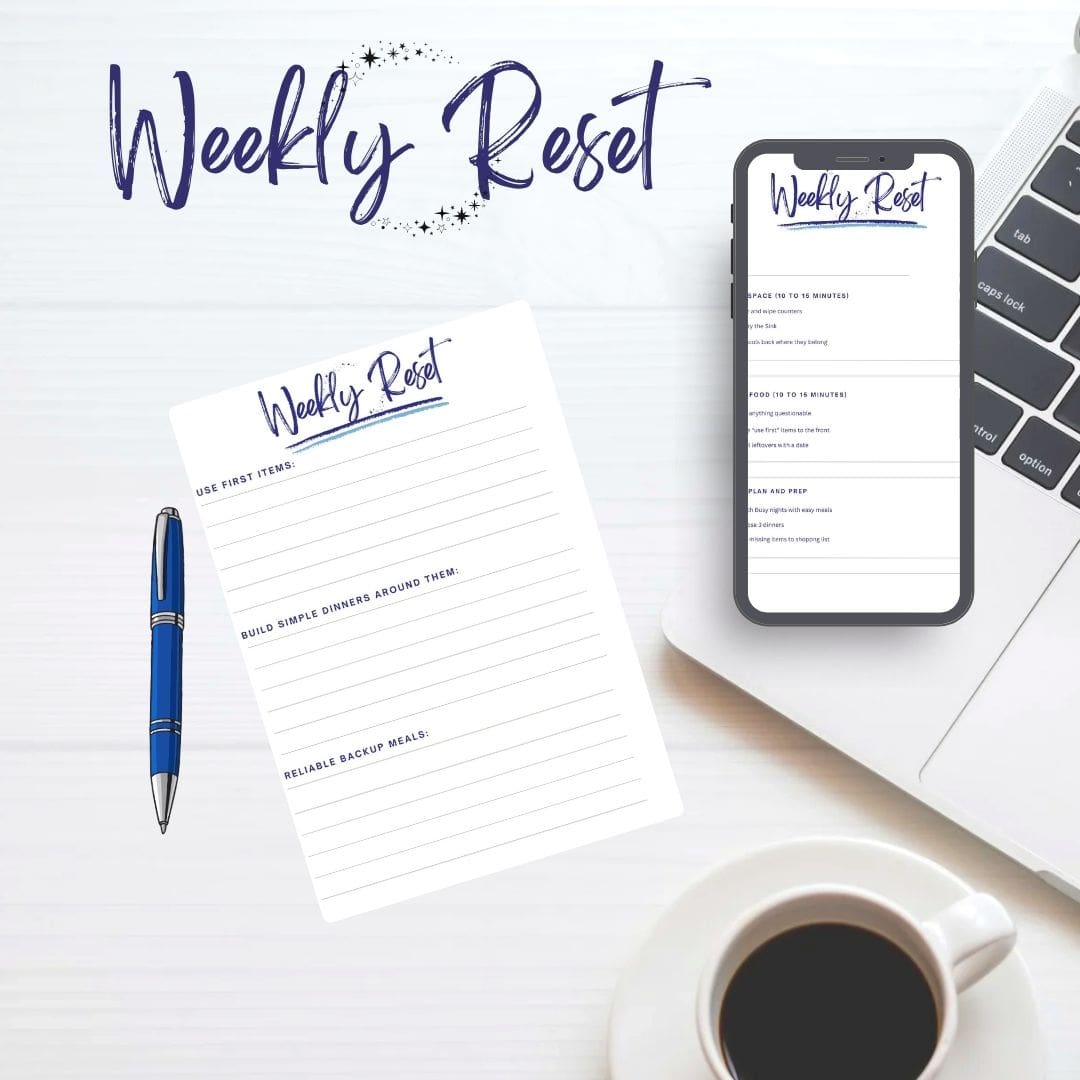
So how do you stay on track with your weekly reset? You can track it in a notebook or a notes app on your phone. Refer to this list:
- Reset the space (10 to 15 minutes): clear counters, empty sink, load and run the dishwasher
- Reset the food (10 to 15 minutes): Take a quick inventory, move “use first” items to the front, and label leftovers.
- Reset the plan and prep (10 to 15 minutes): Choose 3 to 4 dinners, create a shopping list and prep one or two small things.
If you want a printable helper, grab my free kitchen reset checklist.